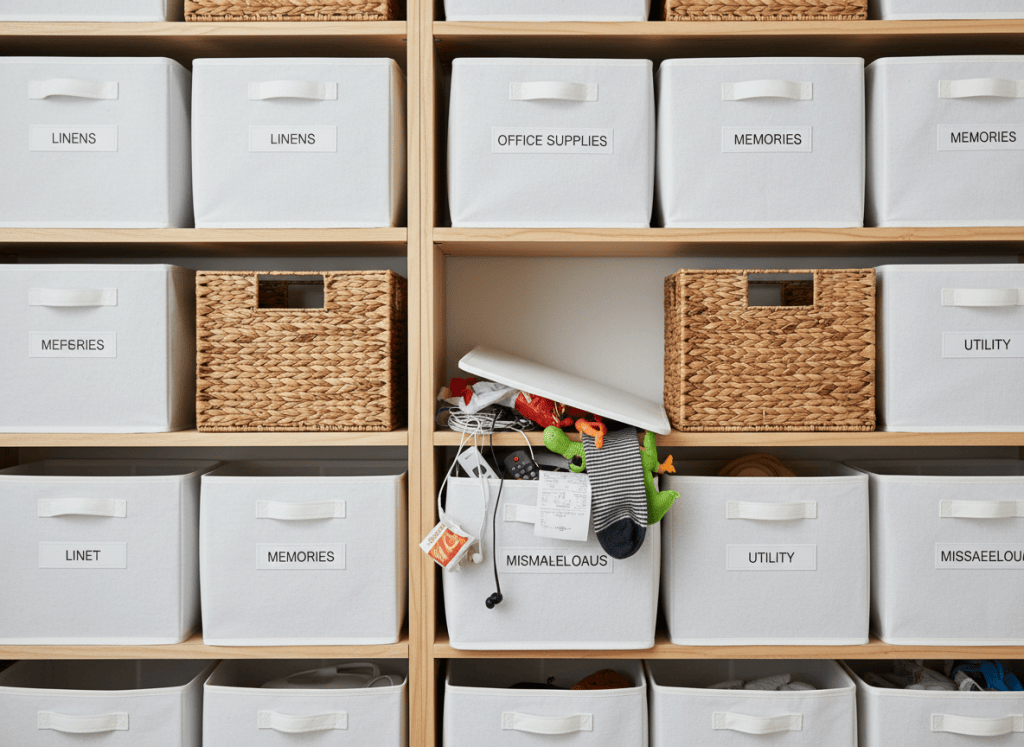
Every home organizing show ends the same way. Someone buys a set of matching bins, labels them, stacks them neatly on a shelf, and the room looks incredible for the camera. But nothing actually left the house. The mess just got folded into boxes and given a name. That’s the trick storage plays on us. It looks like a solution, but most of the time it’s just hiding the real problem, which is that we own more than we need.
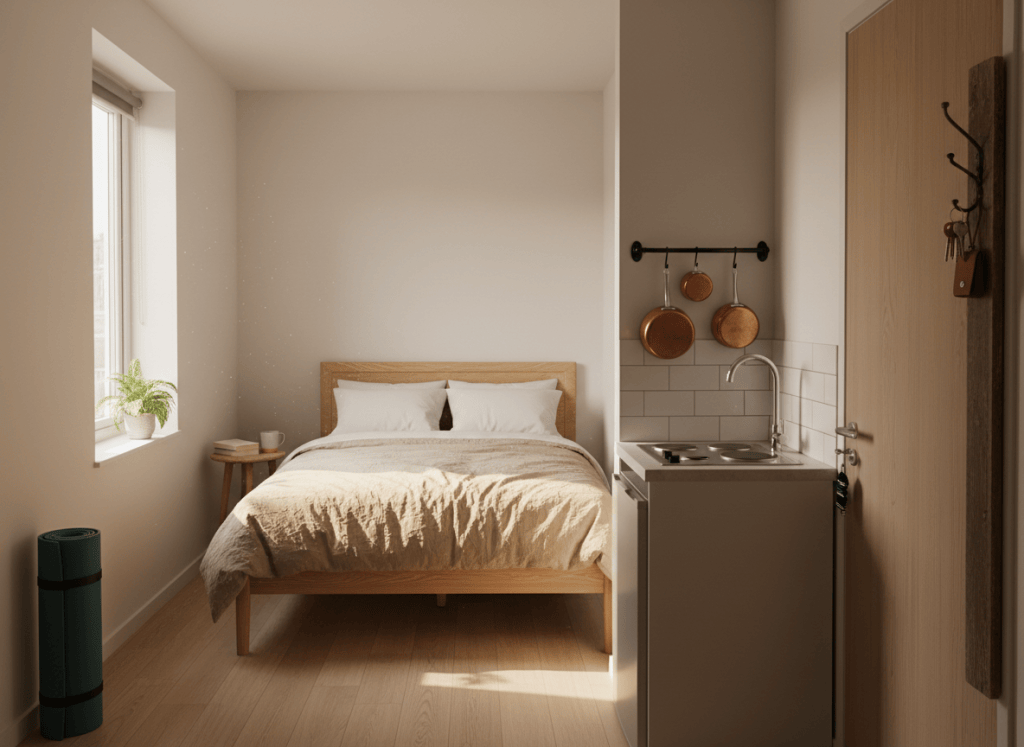
I think about this a lot because of a few years I spent living in a tiny studio. It wasn’t a lifestyle choice at the time, it was just what I could afford, and what was available. Small kitchen, one closet, barely enough floor space to lay out a yoga mat or open a suitcase. I remember feeling a bit embarrassed about it when people came over. But looking back now, those were some of the easiest years I’ve had when it comes to my relationship with stuff. And it took me a while to understand why.
The obvious reason is that I simply didn’t have room to accumulate things. If I wanted to buy something new, I had to think about where it would actually go, because there was no spare drawer, no extra shelf. This alone did more to control my spending than any budget app or willpower ever did. I couldn’t go on a shopping spree even if I wanted to, because there was nowhere for it to be kept. I’d stand in a store, think about buying something, and picture trying to fit it into that studio and half the time I’d just put it back. The apartment itself was doing the disciplinefor me.
What I didn’t expect was how much easier the place was to keep tidy. Not because I was more organized as a person, I don’t think I was, but because everything had exactly one place it belonged. The keys went on the hook by the door. The two pans I owned went in the same spot under the stove. There was no ambiguity about where anything lived, because there wasn’tenough space for ambiguity. Tidying up wasn’t really a task, it was just putting things back where they already belonged. Compare that to a bigger place with a garage, a spare closet, maybe astorage unit on top of that, where things get put down “for now” and then just stay there because there’s room for them to stay there indefinitely. Space doesn’t just hold your belongings. It shapes how much attention they need from you.
That studio apartment taught me something I still think is one of the most useful ideas in how I approach a home now. Owning less isn’t really about deprivation. It’s about designing your environment so the decisions get made for you, before you even have to think about them.
Which brings me to the second thing I want to talk about, because it changed how I think about storage even after I left that small apartment behind. It’s not just how much you own. It’s whether you can actually see what you own.
Here’s what I mean. Say you have a drawer full of cables, chargers, random tools, the kind of drawer every home has somewhere. If everything is piled on top of everything else, you dig through it once, don’t find what you’re looking for fast enough, and just buy a new one. The old thing is still in there. You just can’t see it, so as far as your daily life is concerned, it doesn’t exist anymore. The same thing happens with clothes stuffed into the back of a closet, or kitchen tools lying behind other kitchen tools, or anything stored in a box that then gets stacked behind another box. Out of sight really does mean out of mind. Not as a saying, but as something close to a physical law of how we use our homes.
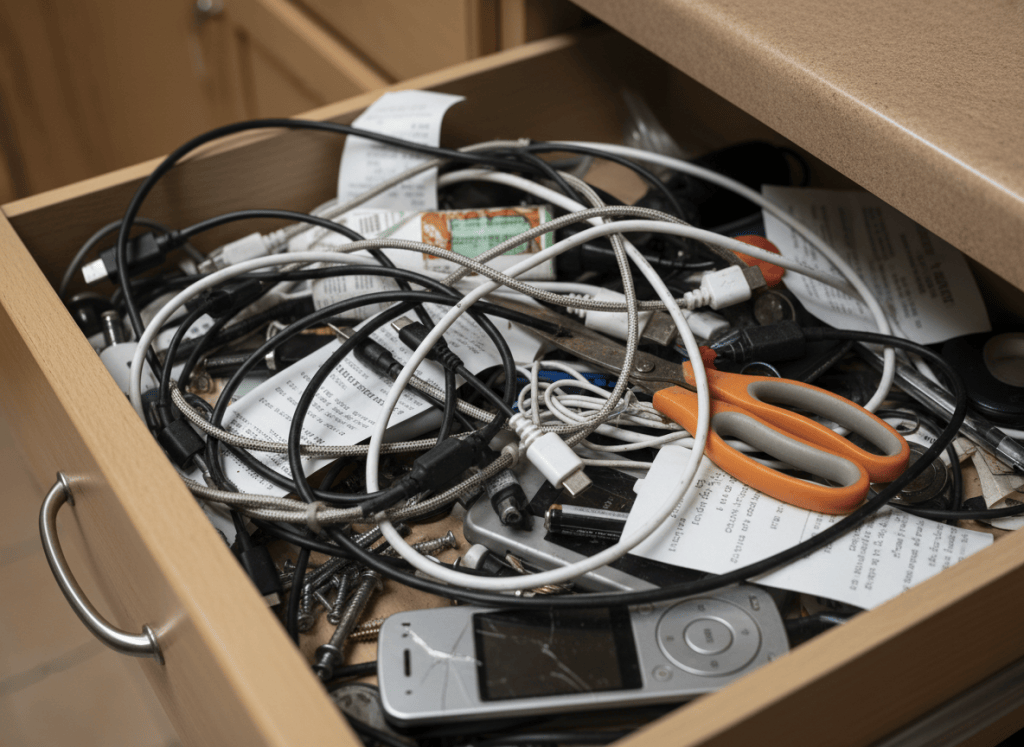
I’ve come to believe that if you can’t see everything in a drawer or a closet the moment you open it, you own too much for that space, full stop. It doesn’t matter how clever the storage system is. A drawer organizer, a set of stacking bins, a closet system with pull out racks, none of that solves the underlying issue if the result is still a space where things get lost the moment they’re put away. Good storage should work like a shop window. You open it and you can see everything on offer, at a glance, without digging. If you have to dig, kneel down, take out three other things first, then that space has stopped being storage and started being a hiding place. You’re not organizing at that point. You’re just filing things somewhere so you don’t have to look at them, which is exactly the outcome that makes you forget you own them and go buy a replacement.
This is why I’m skeptical of storage as the fix for a cluttered home. Buying more bins, more baskets, more stackable containers, more square footage, treats the symptom and skips the actual cause. It’s a way of accommodating more stuff instead of asking whether you need that much stuff in the first place. A bigger container for the same pile of things you didn’t need is still the same pile of things you didn’t need. It’s just tidier looking now, until it isn’t again in six months.
The real fix is smaller and less exciting than a trip to a home store. Own less. Keep only what fits in a space where you can actually see it. If a drawer is so full you can’t tell what’s in it without moving things around, that’s not a storage problem, that’s a signal to take everything out and be honest about what you’d actually miss. Most of the time the answer is very little.
I don’t live in that tiny studio anymore. I have more space now, and if I’m honest, more stuff than I did back then too. But I try to hold onto the two lessons that place taught me, even in a home that could easily let me forget them. Let the size of your space limit what you bring into it, rather than constantly expanding the space to fit more in. And keep things visible. If you open a drawer or a closet and can’t see everything at once, that’s not a sign you need better storage. It’s a sign you need less to store.


Leave a Reply