Getting to Grey Owl: What a Forgotten Travel Book Taught Me About Wanting Less
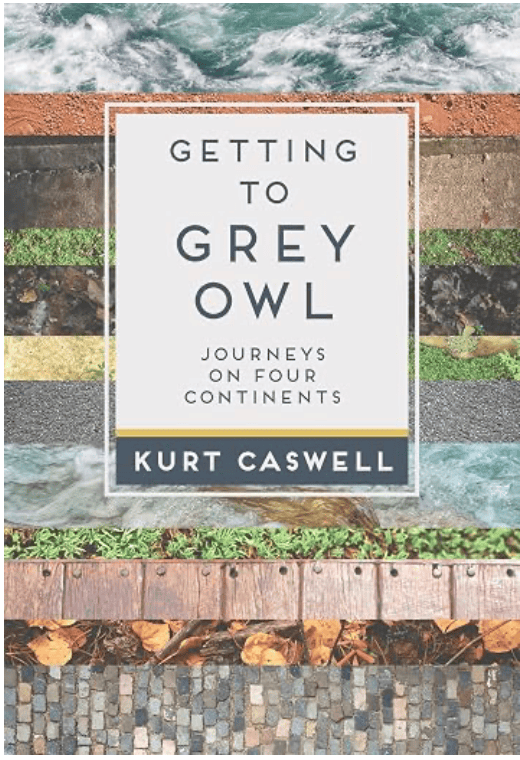
I picked up Getting to Grey Owl expecting a travel memoir. I finished it wondering whether everything I’d been searching for had been much simpler than I’d imagined. Kurt Caswell spends over twenty years crossing four continents – buying a rug in Morocco, riding a riverboat in China, watching a bullfight in Spain, climbing mountains in the UK, backpacking Iceland’s Hornstrandir Peninsula – and somehow, by the end, all of that travelling resolves into a single, quiet question: what are you actually looking for?
That question is the reason this book has stayed with me longer than most things I’ve read this year.
The life you’re looking for might be quieter than you think
Caswell doesn’t frame his travels as a young man’s hunger for adventure, even though there’s plenty of that on the surface. Underneath the mountains and the markets, what he’s chasing is stillness. At one point, teaching in Spain and surrounded by people, he admits to hungering for something as simple as a bright star overhead and an empty stretch of land in front of him. That line stopped me. It’s not what you expect from a book that spans four continents – not more spectacle, but less. Not a bigger world, but a quieter one.
I think that’s the trap a lot of us fall into, myself included. We assume the life we want is somewhere out there, bigger and louder and further away than the one we’re living. Caswell’s book quietly argues the opposite: that the search itself, all that distance covered, is often just a long way of arriving somewhere small and still. The title comes from the book’s final destination – a real trip to the actual cabin where Grey Owl, Canada’s famous early conservationist, once lived alone in the woods. Grey Owl spent his life pursuing exactly that kind of quiet. It took Caswell most of the book, and a lot of the world, to understand why.
Can nature actually change who you become?
The book’s real engine isn’t geography, it’s transformation. Caswell isn’t cataloguing places so much as watching himself get rearranged by them. Time outdoors doesn’t just relax him – it reorders what he pays attention to, what he wants, what he thinks he’s owed by life. There’sa scene late in the book, back in the American West, where he’s trekking through a mountain storm with three Peruvian sheepherders and thousands of sheep. He ends up carrying a lamb through the worst of it, and somewhere in that exhausting, unglamorous act, he lands on something like a thesis for the whole book: the things we love are temporary, but the capacity to love them isn’t. That’s not a conclusion you reach by thinking about nature. It’s one you reach by being cold and tired inside it.
That’s what separates Getting to Grey Owl from a lot of travel writing, where the landscape is scenery for the author’s personal growth. Here, the landscape is doing the work. The mountains and rivers and empty peninsulas aren’t backdrops, they’re the thing actually changing him, essay by essay, mile by mile. It made me think about the difference between visiting nature and being altered by it, which are not the same thing at all, even though we use the same words – hiking, camping, traveling – for both.
A beautiful story with an uncomfortable truth at its center
And then there’s Grey Owl himself, who the whole book is quietly circling.
Grey Owl was one of the most famous conservationists of the early twentieth century – a trapper turned wilderness advocate who wrotebestselling books, lectured across Britain, and helped shift public feeling about wild spaces at a moment when almost no one was thinking that way. He was also, it turned out after his death in 1938, an Englishman named Archibald Belaney who had invented an entire identity for himself, claiming Apache heritage and a childhood in Mexico he never had, adopting a First Nations name and persona that wasn’t his to take.
Caswell doesn’t let himself off the hook here, and he doesn’t let the reader off either. The book doesn’t try to rescue Grey Owl from what he did or flatten the deception into a footnote so the conservation legacy can shine uncomplicated. It sits in the discomfort. Grey Owl’s writing genuinely changed how people thought about wilderness. He was also, for the final eight years of his life, lying about who he was to the people who trusted him most. Both of those things are true at the same time, and Getting to Grey Owl is honest enough not to pick one.
What struck me is that Caswell treats this the way you’d treat a complicated person in your own life – with real affection and real clear-eyed honesty, at the same time, in the same paragraph. That’s a hard balance to strike on the page. Most books about flawed historical figures tip one way or the other: hagiography or takedown. This one manages neither, and it’s better for it.
Why a forgotten book stayed with me
I don’t think many people have read this book, and that’s part of why I wanted to write about it. But it did something to me that flashier travel writing rarely does – it made me think less about where I want to go and more about what I’m actually running from, or toward, when I go anywhere at all.
I kept thinking about my own version of Caswell’s line – the bright star, the empty land – and what my equivalent of that hunger looks like. Not a place. A feeling of enough. The book never hands you a tidy answer about how to get there. Caswell doesn’t come home transformed in some clean, marketable way. He comes home still restless, still carrying the same contradictions Grey Owl carried, just more aware of them. That felt truer than a neat ending would have.
There’s something fitting about a book that spends four continents chasing stillness, only to end at a small cabin belonging to a man who lied about who he was in order to tell the truth about the wild. It doesn’t resolve. It just sits there, honestly, the way the best travel writing does – less concerned with answers than with making you ask better questions about your own life once you’ve put the book down.
That’s what Getting to Grey Owl did for me. Months later, I’m still asking them.
Read this if… you feel constantly rushed, enjoy travel and nature writing, or appreciate reflective biographies.


Leave a Reply