What Trekking to Everest Base Camp Taught Me About Slowing Down
On paper, Everest Base Camp is a 130-kilometre trek through the Khumbu Valley. People talk about altitude, suspension bridges, and reaching 5,364 metres. They ask if it was hard. They ask if I saw Everest. They want a summary they can nod at.
That’s not what I remember.
What I remember is waking before sunrise in tiny teahouses, the smell of juniper smoke drifting through the villages, and mountains so impossibly large they made everything I’d been worrying about back home seem wonderfully small. Somewhere between Lukla and Base Camp, my sense of scale just … reset.
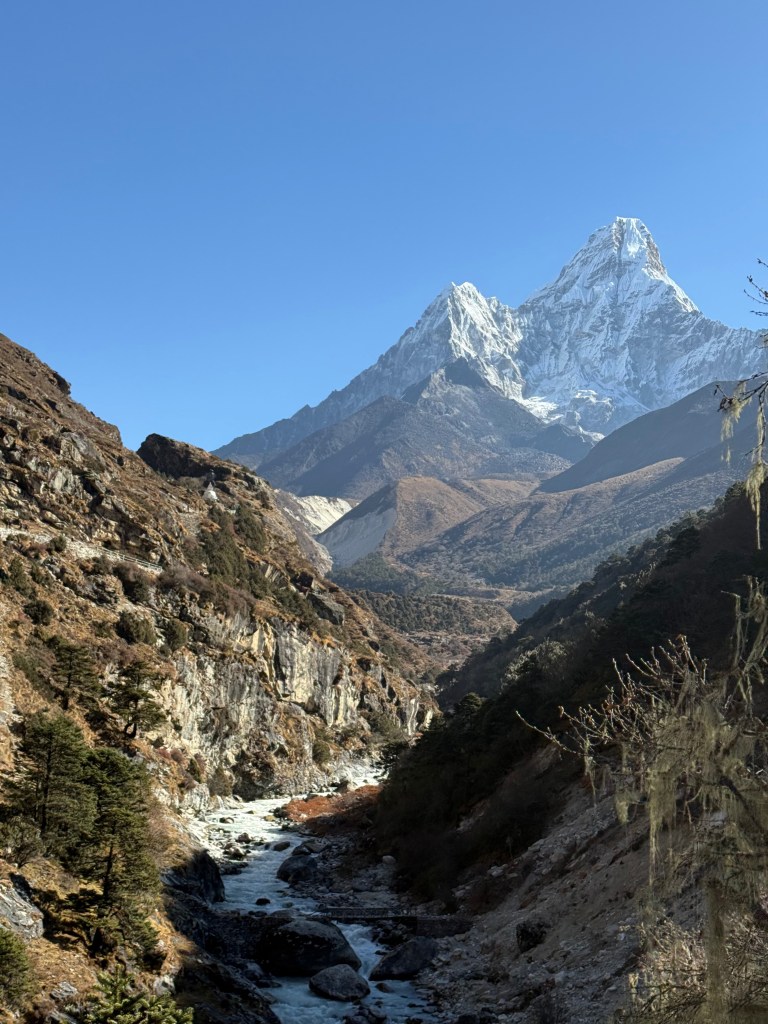
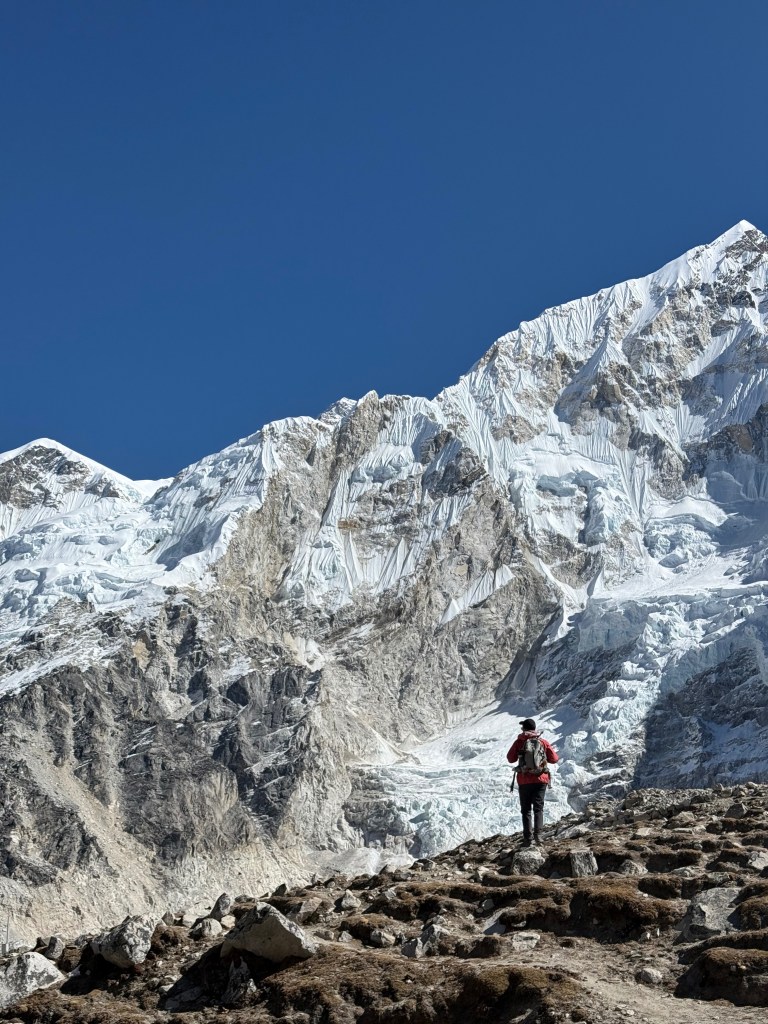
The mountains change your sense of scale
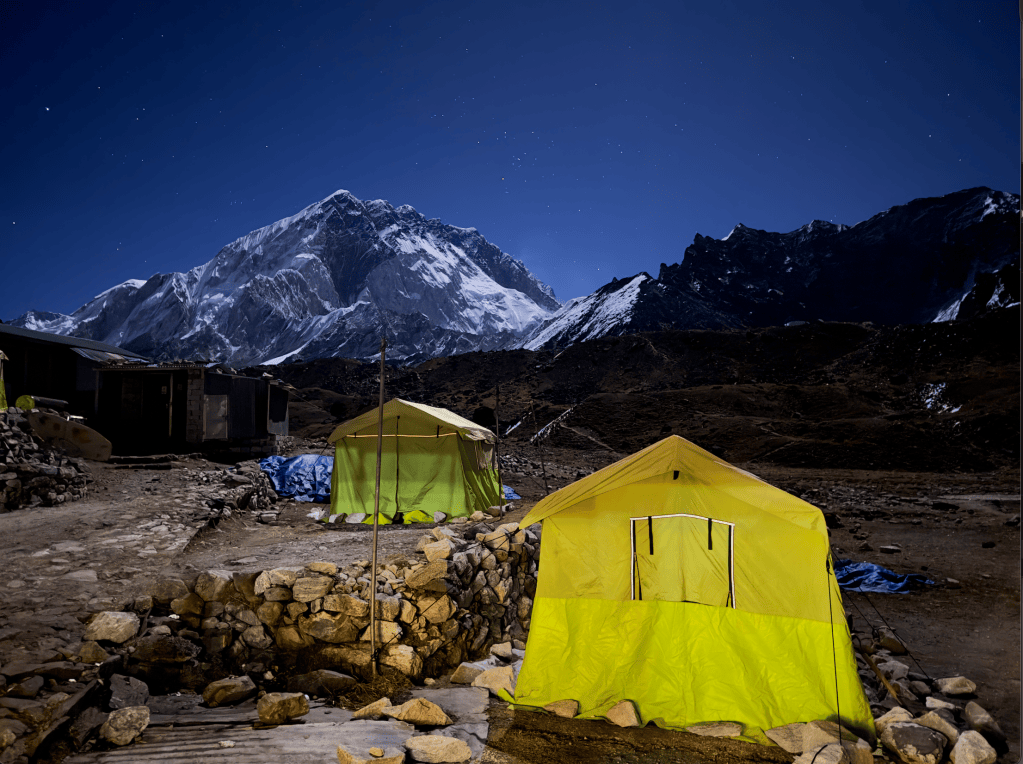
I went in the second week of November, which turned out to be a gift. Every single day was clear – sunny, cloudless, blue-sky mornings that turned into blue-sky afternoons, the kind of visibility that makes every peak look close enough to touch. The trade-off came at night, oncethe sun dropped behind the ridgelines and took all the warmth with it. Some evenings the temperature fell to around -25°C, closer to the end of the trek, and you learned quickly what it means to sleep in every layer you own.
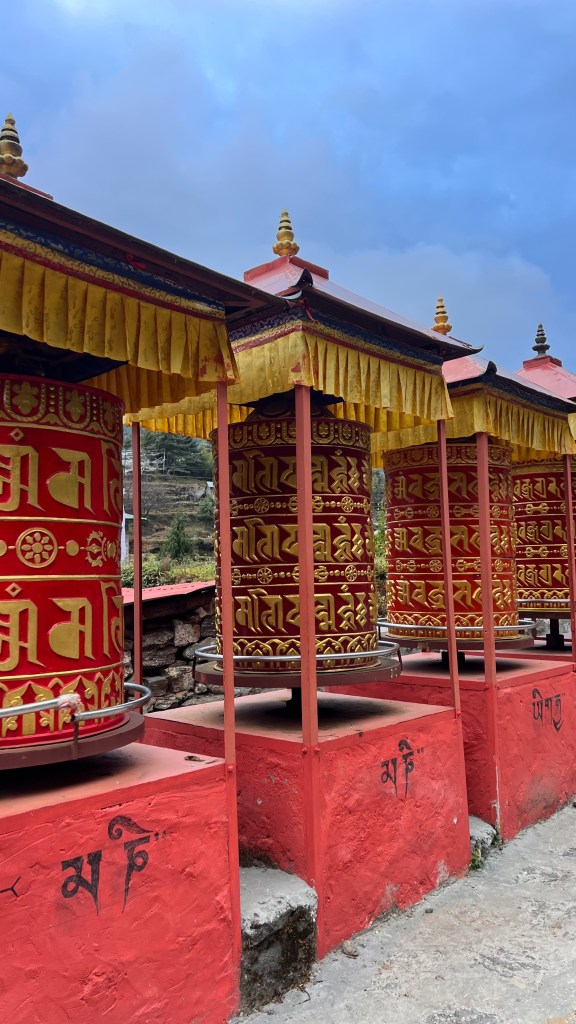
You fly into Lukla already a little disoriented – the airstrip tilts uphill into a mountainside, and you step off the plane at 2,860 metreswondering what you’ve signed up for. We spent our first night right there in Lukla, acclimatising to the altitude jump before the walking even began. But once the trail starts, it doesn’t ask for your opinion. It just goes, following the Dudh Kosi river down into a forested valley, past mani stones and prayer wheels and Sherpa homes with laundry drying in the sun.
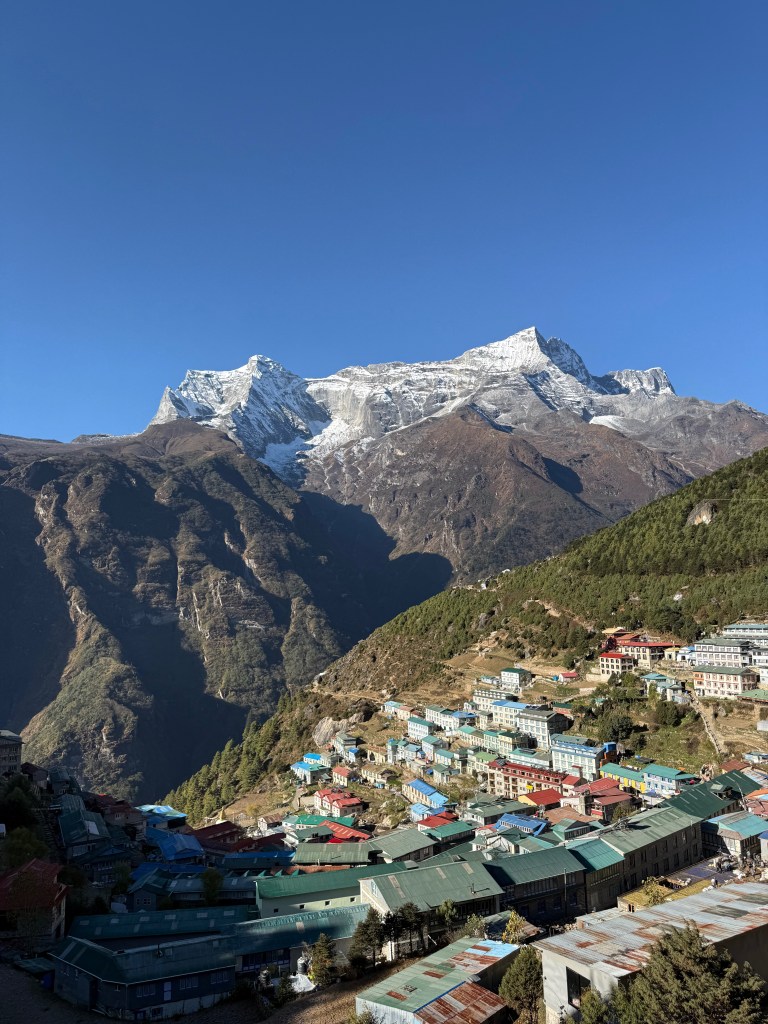
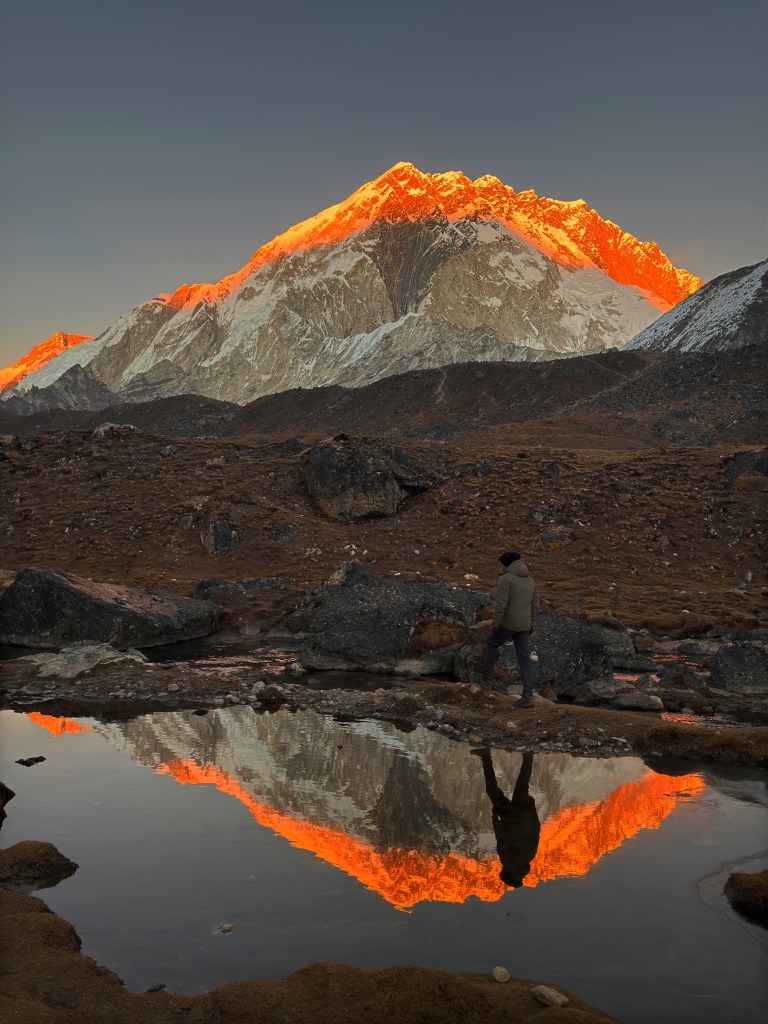
The mountains introduce themselves slowly at first. Then, somewhere past Namche Bazaar, they stop being polite about it. Ama Dablam appears around a curve like it’s been waiting for you – that sheer, elegant spike of rock and ice that looks more sculpted than grown. Later, the first real view of Everest itself, half-hidden behind Nuptse’s shoulder, almost unassuming next to Ama Dablam’s drama. It doesn’t need to show off. It’s Everest.
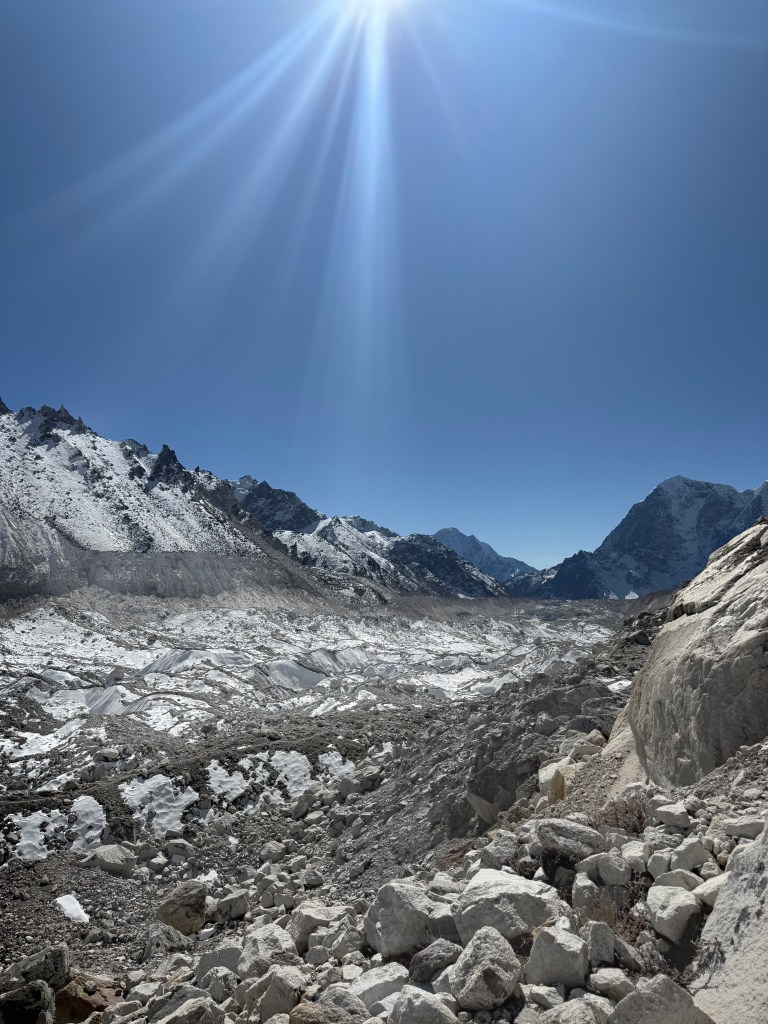
By the time I reached the Khumbu Glacier, I understood something I hadn’t before: how a landscape can make you feel appropriately small—not insignificant, simply part of something older than yourself. Up there, even silence feels different. Thin air swallows sound the way snow swallows footsteps. After a while, you stop trying to fill it.
Life becomes beautifully simple
Somewhere around day three or four, the days stop being days and start being a rhythm. Wake up. Drink tea – Pack. Walk. Eat. Talk. Walk more. Arrive somewhere new. Eat again. Sleep like the dead.
There’s no decision-making beyond which direction the trail goes, which is decided for you, and how many layers to put on, which the weather decides for you. No notifications. No inbox. No fifteen tabs open in your head. Just the next teahouse, the next cup of milk tea, the next turn in the valley.
It sounds like it should be boring. It’s the opposite. Stripped of everything else, each small thing gets its full weight back , the actual taste of the ginger tea, the actual warmth of the sun the moment it clears the ridge, the actual relief of sitting down. Life becomes beautifully simple because there’s simply less of it to manage.
The people
I hadn’t expected the people to be the part I’d miss most.
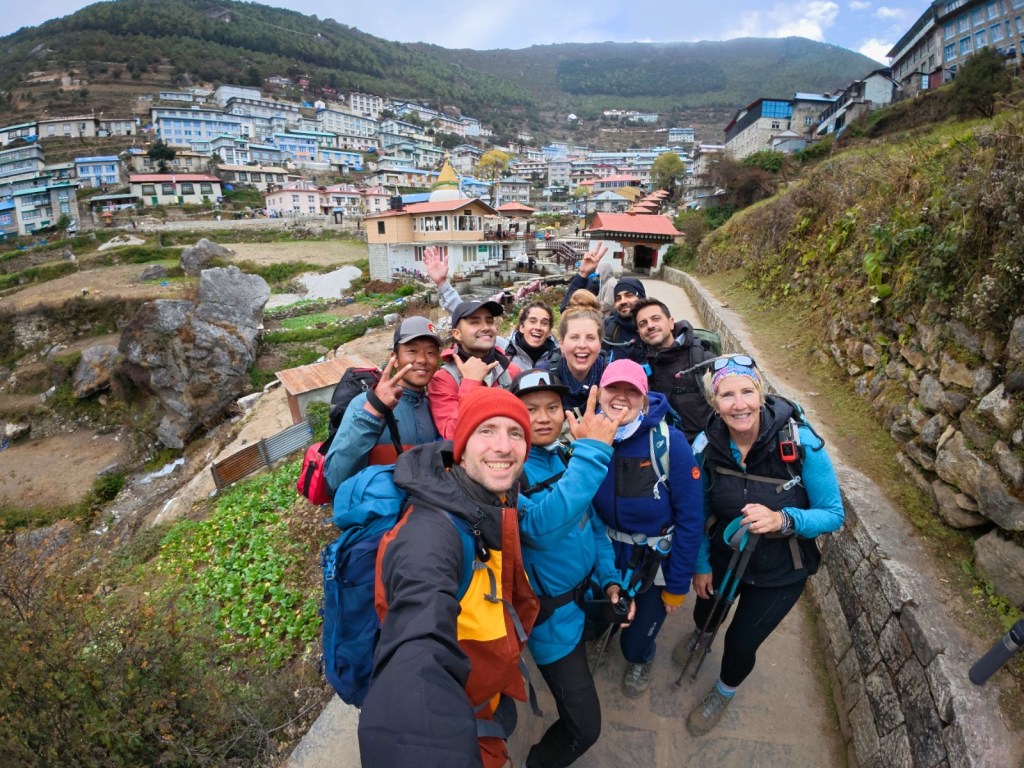
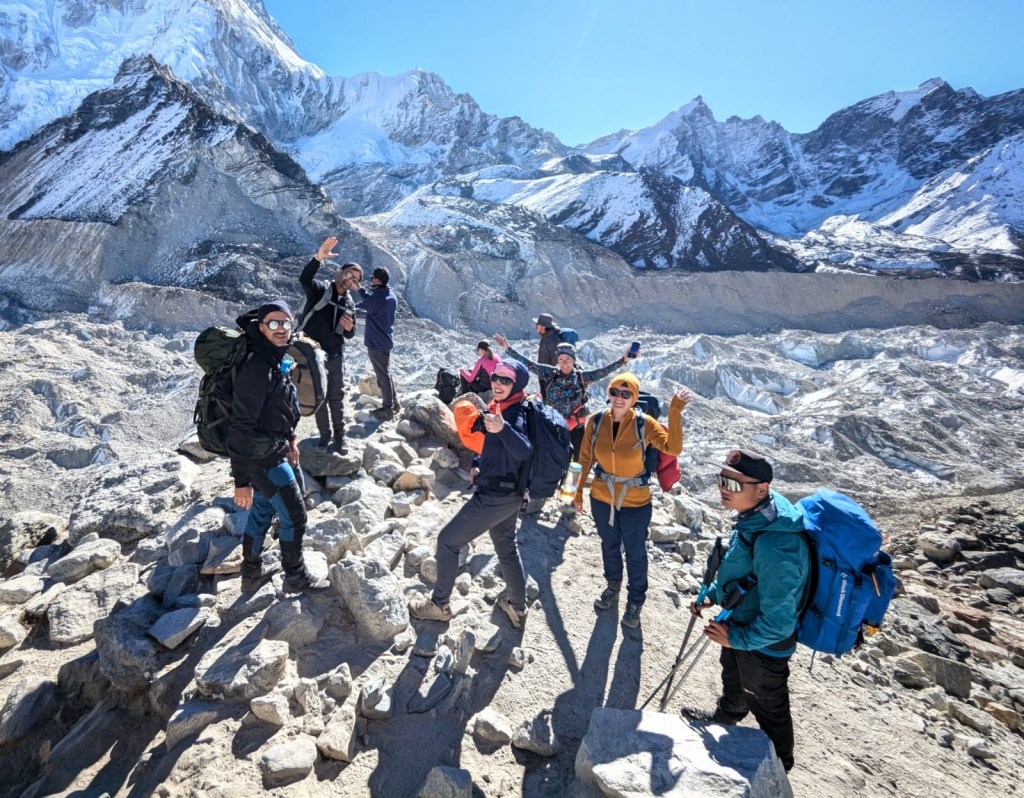
There’s our own crew, obviously, 2 sherpa guides who somehow always knew exactly how far it was to the next teahouse and a porter carrying more than seemed physically reasonable, all of them treating altitude the way the rest of us treat a flat pavement. But it’s bigger than that. It’s the other trekkers – strangers on day one, familiar faces by day five, because everyone is more or less walking the same trail at the same pace, stopping at the same villages, suffering the same headaches at the same altitudes.
You end up leapfrogging the same 8 people for a week and a half. You learn their names, their stories, their reasons for being there, whether they take sugar in their tea. By Base Camp, people you’d never have spoken to on a street back home feel like old friends. That’s a strange and lovely thing a trail does that a city rarely manages.
Walking instead of arriving
Everyone obsesses over Base Camp before the trip. It’s the name on the itinerary, the thing you tell people you’re doing. But Base Camp itself is only a few hours out of nearly two weeks – a rocky, glacier-strewn clearing where you take your photos beneath the icefall, feel the scale of the thing, and turn around.
The real trip is everything before it. It’s the six-hour climb into Namche with your lungs figuring out the thinner air. The rest day wandering and visiting the highest Irish Pub in the world. Tengboche’s monastery, its low chanting drifting into the cold. Dingboche’s high, wide valley with Island Peak sitting at the far end like a promise. The steadily thinning trees, the thickening silence, the sharpening cold as you push through Lobuche toward Gorakshep.
We spend so much of ordinary life chasing destinations – the promotion, the finish line, the summit – that we forget the getting-there is where life actually happens. Base Camp was the goal. The eight days walking towards it were the trip.
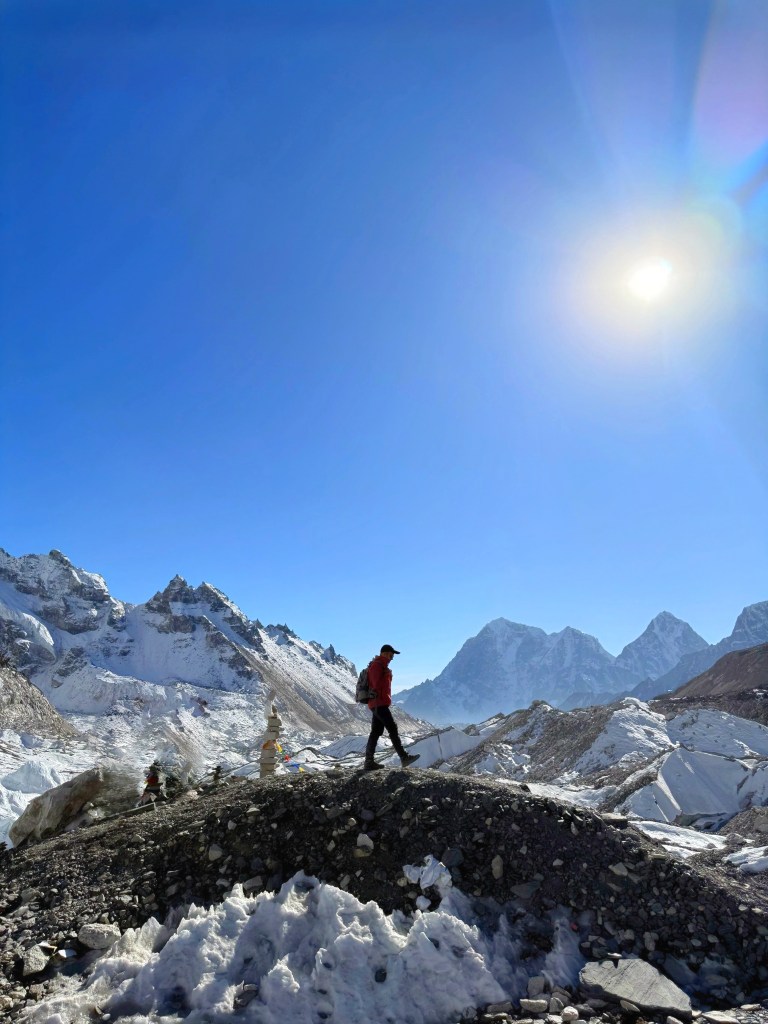
Kala Patthar
If you ask people who’ve done this trek what the emotional high point was, plenty won’t say Base Camp at all. They’ll say Kala Patthar. I can’t say the same, and that’s become its own part of the story.
Kala Patthar is a pre-dawn climb, in proper cold, to 5,643 metres – higher than Base Camp itself – timed so you’re up there for sunrise over Everest. On our night, the cold had other plans. It was brutally, unreasonably cold, even by the standards of what we’d already gotten used to, and by the time it came to actually get up and go, most of the group decided against it. I was one of them. We stayed in, layered up, and let the mountain keep that view to itself.
For weeks afterwards I wondered whether I’d made the wrong decision. Then, slowly, I realised the mountain had taught me something more valuable than another photograph.
On the usual route you can trek back out the way you came, retracing the whole route down through Lobuche, Dingboche, Tengboche and Namche – several more days of walking. Being short on time, I opted for the helicopter instead, flying straight from Gorakshep back to Lukla. It compressed four days of walking into fifteen extraordinary minutes. Looking down on the trail we’d spent more than a week following, I could suddenly see how the valleys, villages and rivers connected. If you have the time, I’d still recommend walking out. But I never felt I’d cheated the experience – I had simply seen it from one final perspective.
The Himalayas teach patience
Somewhere above Namche, fitness stops mattering as much as you’d think. Altitude doesn’t care how many stairs you can climb at sea level. It slows everyone down to roughly the same pace – the acclimatisation days built into the schedule aren’t a suggestion, they’re the whole point. You learn to walk slower than feels natural, breathe more deliberately than feels necessary, and resist the urge to power ahead just because your legs say you can.
Months later, I still catch myself thinking about those mornings in the Khumbu Valley.
The frost on the windows. The first cup of tea. Boots laced in silence while the mountains slowly caught the sunrise.
Everest turned out to be the least interesting part of Everest Base Camp.
What stayed with me wasn’t standing beneath the world’s highest mountain. It was discovering how little I needed to feel completely alive.
Somewhere between Lukla and Base Camp, life became wonderfully uncomplicated.
And perhaps that’s what the Himalayas had been trying to show me all along.
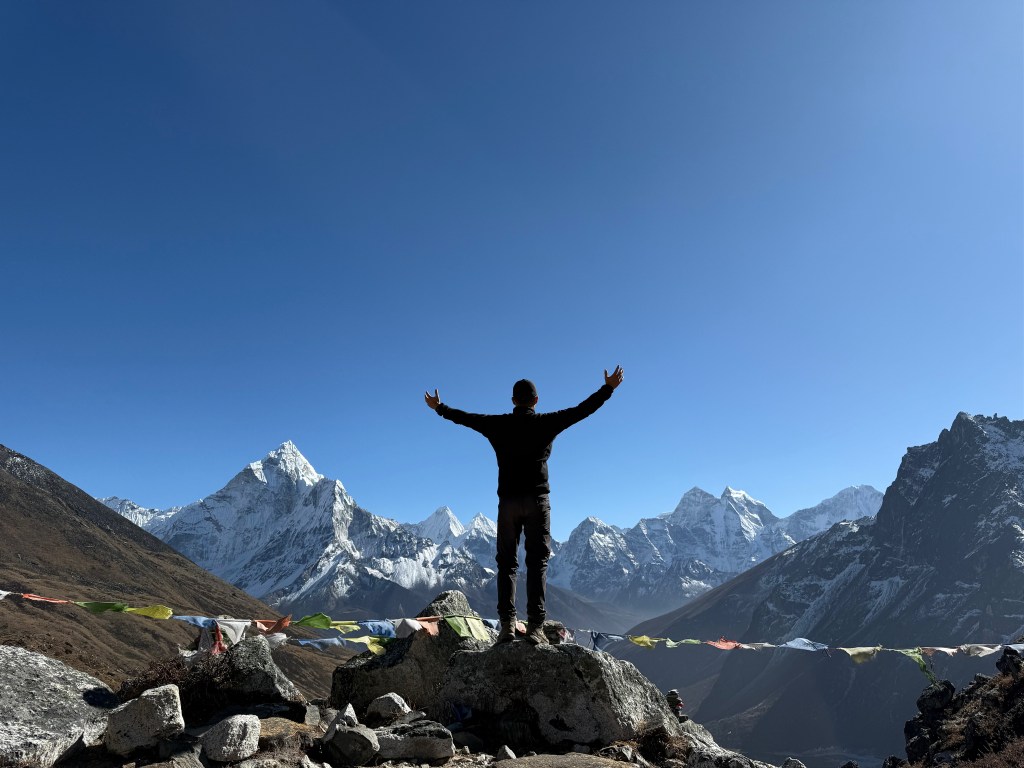
Trek completed via Follow Alice’s Classic EBC Trek and Helicopter itinerary: Kathmandu → flight to Lukla (overnight) → Phakding → Namche Bazaar (acclimatisation) → Tengboche → Dingboche → Lobuche → Everest Base Camp → Kala Patthar → helicopter to Lukla → Kathmandu. In our case, the usual drive to Ramechhap was swapped for a direct flight straight to Lukla, where we spent the first night before starting the walk in.


Leave a Reply